
Your Baby Eats with All Eight Senses
Child Development · Feeding & Nutrition · BabySpace Coachella Valley · 5 min read · Ages 0-5
Mealtime is so much more than a bite of food.
Meals are a full sensory adventure that shapes your child's relationship with eating for life.
From that first spoonful of puréed sweet potato to confidently crunching a carrot stick, your child's journey with food is shaped by far more than taste alone. Research shows that all eight senses, including three you might not expect, are deeply involved every time your little one sits down to eat. Understanding this can transform how you approach mealtimes in your home.
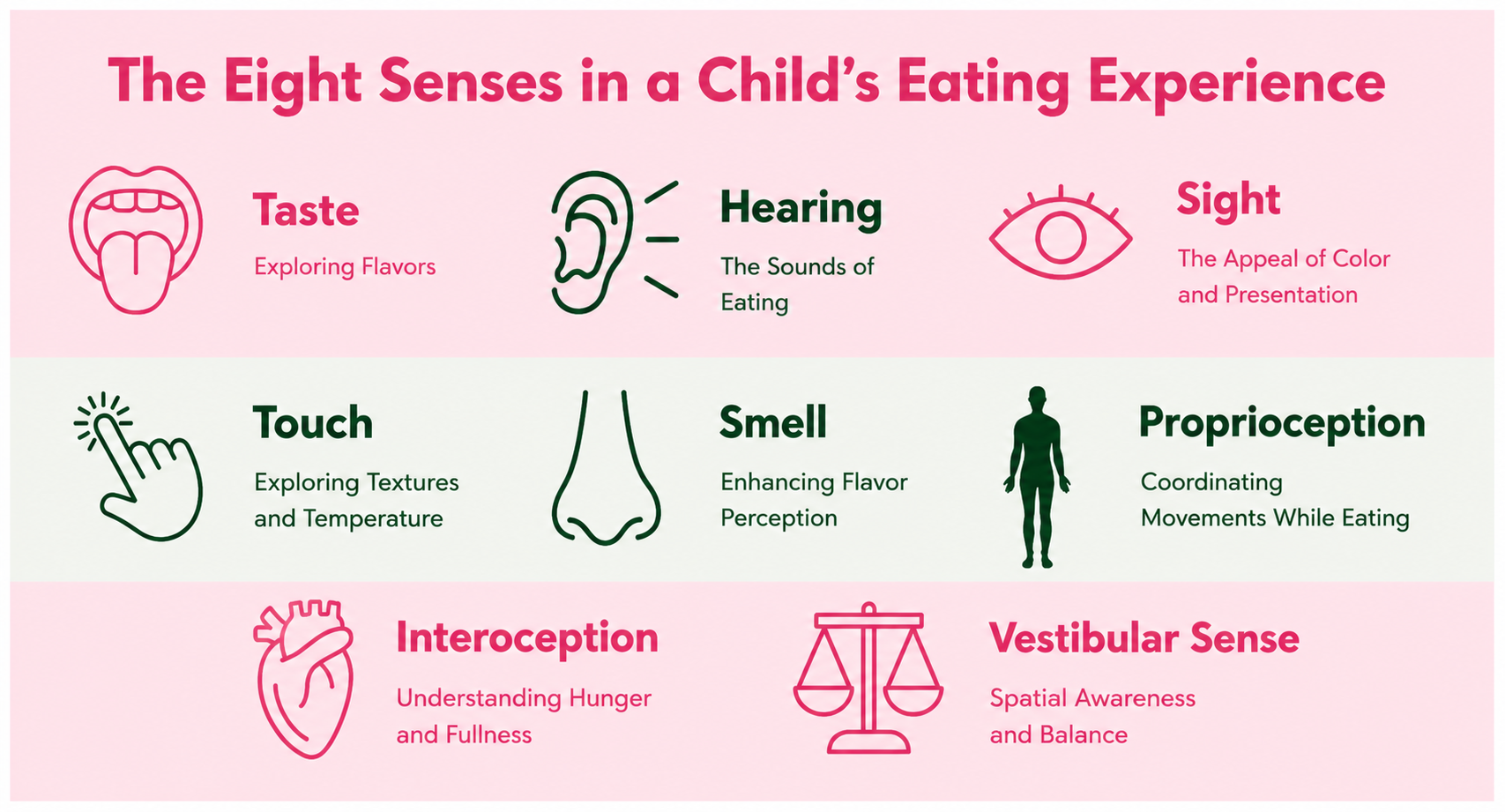
Taste: Exploring Flavors
Taste buds detect sweet, salty, sour, bitter, and umami, and children are born with a preference for sweetness. Offering a wide range of tastes early, especially vegetables, helps expand their palate and makes them more open to variety as they grow. Introducing bitter flavors like leafy greens sooner rather than later can significantly reduce fussiness down the road.
Desert tip: Coachella Valley's farm stands are gold mines. Let your toddler smell and taste fresh dates, citrus, or stone fruits at the market before you cook with them at home.
Smell: Enhancing Flavor Perception
Our sense of smell is so tightly linked to taste that up to 80% of what we perceive as "flavor" is actually aroma. Letting children smell food before eating it builds excitement and curiosity. Offering a handful of fresh herbs to sniff, or letting them lean in close while something fragrant cooks, creates a deeper sensory connection with food before a single bite is taken.
Desert tip: Keep a small pot of fresh basil, mint, or rosemary in your kitchen at toddler-accessible height. Let little noses explore freely.
Sight: The Appeal of Color and Presentation
How food looks profoundly influences whether a child is willing to try it. Bright, varied colours make plates more appealing and naturally draw little eyes toward nutrient-rich fruits and vegetables. A visually stimulating meal environment isn't about elaborate food art. It's about giving color and arrangement a moment of intention.
Desert tip: Aim for at least three colors on the plate. The Valley's year-round produce makes this beautifully easy.
Touch: Exploring Textures and Temperature
Touch is one of the most powerful ways children explore food. Feeling the squishiness of a ripe banana, the crunch of a cucumber, or the warmth of freshly cooked oatmeal builds familiarity and comfort. Children who are allowed to play with, squish, and handle food often develop less anxiety around new textures, which is a key factor in reducing picky eating.
Desert tip: A silicone splat mat under the highchair means you can relax while they explore. The tactile experience is genuinely worth it.
Hearing: The Sounds of Eating
The crunch of a carrot, the sizzle of onions in a pan, the pop of a bubble in porridge. Sound is a surprisingly powerful part of how appetizing food feels. Letting children listen to cooking sounds and encouraging them to notice the crunch of what they're eating adds an auditory dimension that makes eating more engaging and interactive.
Desert tip: Even a 2-year-old can stand safely and with supervision at the stove side and listen to the sounds of cooking. Name what they hear. It builds both language and food curiosity.
Proprioception: Coordinating Movements While Eating
Proprioception is the sense that tells the body where it is in space and how much force to apply. At mealtimes, it's at work every time a child reaches for a piece of food, grips a spoon, or brings a cup to their mouth. This sense develops steadily through practice, and messy self-feeding is exactly that practice.
Desert tip: Let babies self-feed finger foods as early as it's safe to do so. The "mess" is purposeful motor learning.
Vestibular Sense: Sitting, Reaching and Balance
The vestibular system, housed in the inner ear, governs balance and spatial orientation. At the table, it's what allows a child to sit upright in their highchair, lean forward to reach a piece of food, and tilt a cup without toppling over. A well-supported seated position (feet flat, back supported) activates this system optimally, helping children focus on eating rather than staying upright.
Desert tip: Use a footrest on the highchair so your baby's feet aren't dangling. It makes a real difference to their stability and focus at mealtimes.
Interoception: Understanding Hunger and Fullness
Interoception is the sense that detects signals from inside the body, most importantly hunger and fullness. When children are encouraged to listen to and trust these internal cues, they develop a healthy, self-regulated relationship with food. Pressuring a child to clean their plate overrides this crucial internal system. Trusting the process and the child is one of the most powerful gifts a caregiver can offer.
Desert tip: Ask "Does your tummy feel full or still hungry?" instead of "Eat three more bites." You're building a skill they'll carry for life.
Supporting a Sensory-Rich Mealtime
Simple, everyday shifts that help your child engage all eight senses and genuinely enjoy the experience of eating:
Encourage Hands-On Exploration — Let children feel, smell, and yes, even play with food. Tactile interaction builds familiarity and reduces anxiety around new textures.
Present Food Creatively — Use colour and arrangement to make plates inviting. A rainbow of fruits and vegetables is more likely to capture a child's attention than a beige plate.
Be Patient with New Foods — Sensory exploration takes time, sometimes many exposures. Allow children to engage with food at their own pace without pressure.
Model Positive Eating Habits — Children learn by watching you. Show genuine enjoyment and curiosity around a variety of foods. It's more powerful than any strategy.
Building a Healthy Relationship with Food, One Mealtime at a Time
Involving all eight senses in eating doesn't require extra equipment or elaborate preparation. It simply requires a shift in perspective, from "getting food into the child" to "letting the child discover food."
At BabySpace Coachella Valley, we're here to support desert families through every stage of the feeding journey. Whether you're introducing solids, navigating a fussy eater, or just looking for evidence-based reassurance, we've got you.
© 2026 BabySpace Coachella Valley · Supporting desert families from the very beginning · Palm Desert, CA
BabySpace Coachella Valley

The playroom at BabySpace Coachella Valley.
Becoming a parent is a profound and life-altering experience, but it comes with its fair share of unspoken challenges. Meeting with other parents and exploring together what you are envisioning life could look like with your infant and toddler is an invaluable piece of new parenthood. By sharing experiences with others in a place like a BabySpace Coachella Valley Mommy and Me group, parents can find solace in the shared journey of raising the next generation, embracing both the joys and the trials that come with it.
Serving the Coachella Valley and surrounding areas, including: Palm Springs, Cathedral City, Rancho Mirage, Indian Wells, Thousand Palms, Palm Desert, La Quinta, Indio, Bermuda Dunes, Coachella, Thermal, Mecca, Desert Hot Springs, Yucca Valley, and Joshua Tree.
Therapist Palm Desert, Therapist Palm Springs, Postpartum Therapist Palm Desert, Postpartum Therapist Palm Springs, Postpartum Depression Palm Desert, Postpartum Depression Palm Springs, Pregnancy Therapist, mom support groups near me, mommy and me near me, moms support group near me, new mothers groups
#mommyandme #newmomlife #mommylife #firsttimemom #pregnancy #prenatalyoga #expectingmom #newmom #newmommy #motherhood #parenthood #postpartum #mommyhood #groupsupport #palmdesert #palmsprings #laquinta #coachellavalley #coachellavalleylife #coachellavalleyevents #SAHM #SAHMlife #wfh #wfhlife #wfhmom #wfhmomlife #momlife #mommyanddaughter #mommyandson #girlmom #boymom #pregnant #childbirthclasses